The measurement is only a beginning.
Head diameter describes the playing surface. It does not describe the whole shell cavity, the head’s thickness and consistency, its tension, or the player’s touch. Those differences can change the response even when two listings show the same diameter.
Compare the actual finished instruments rather than assigning a guaranteed sound to a wood name, color, or carving style.
Reference: Rhythm House Drums — The djembe shell · Rhythm House Drums — Skin and sound
Make the comparison fair.
- Use the same player, room, microphone position, and recording settings. Keep playback volume fixed.
- Ask for a few individual bass, tone, and slap strokes, followed by the same short phrase.
- Hear an ordinary playing level as well as stronger strokes. Ask whether effects or automatic recording adjustments were used.
- Try both drums in the same seating setup when possible. Notice reach, weight, and response as well as the recording.
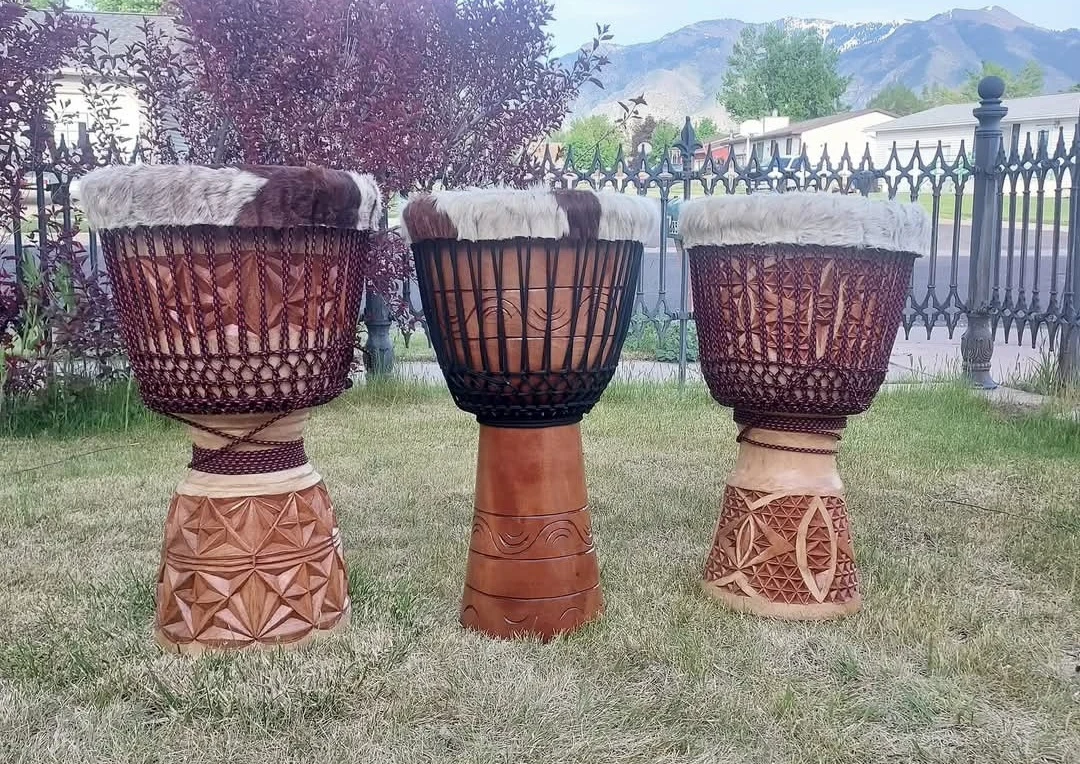
Let your ears do the choosing.
Ask for the same bass, tone, slap, and short phrase on each actual instrument. Appearance alone cannot tell you its sound.
Describe a preference, not a winner.
You do not need the vocabulary of an audio engineer. Tell Justin which example you prefer and what you notice. The existing park performance is one real drum in one setting; it is not an A/B recording of the gallery instruments.
| Notice | Words to try | Question to ask |
|---|---|---|
| Low voice | Rounded, short, lingering | Which bass response do I prefer? |
| Tone and slap | Full, bright, distinct | Can I hear a useful contrast at my playing level? |
| Feel | Responsive, comfortable, demanding | Does this drum suit my hands and technique? |
YOUR NEXT QUESTION
Make it about your drum.
Tell Justin what you’re looking for, or ask about a particular instrument. Availability, specifications, services, and terms are confirmed in conversation.
Explore his work ↗